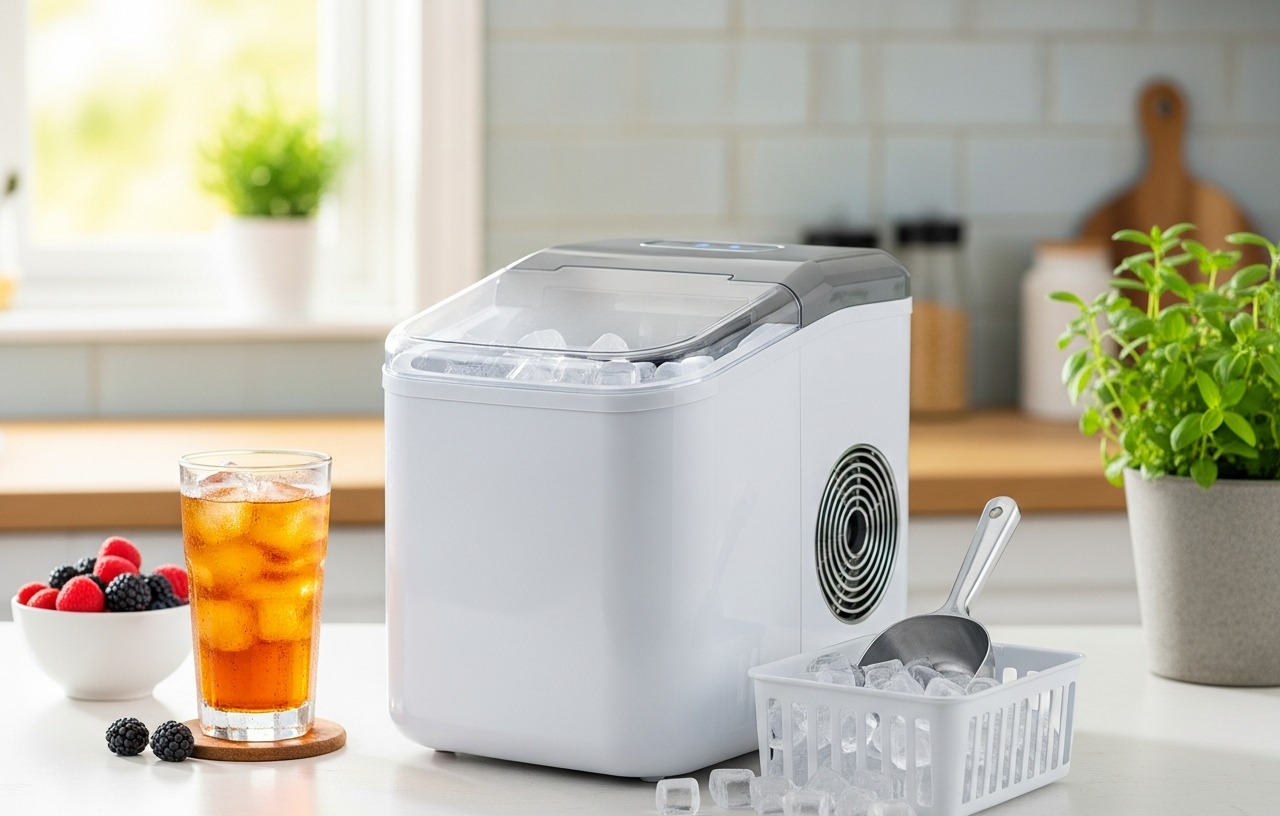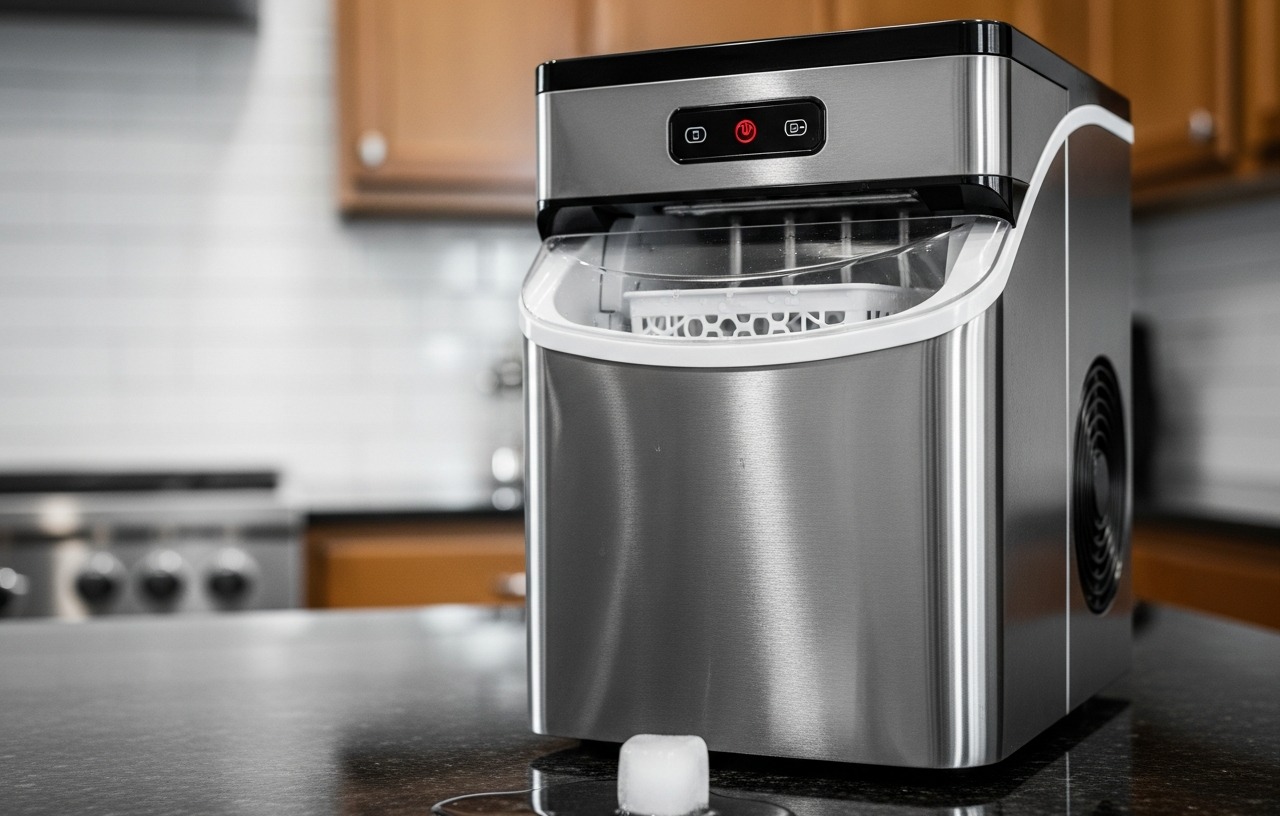
A countertop ice maker that suddenly stops producing ice is a common appliance problem. Most models, whether a Frigidaire countertop ice maker, a Euhomy ice maker, or other brands, rely on a similar internal process. When that process fails, the issue usually stems from one of several identifiable causes. Identifying the root of the problem can save you from unnecessary repair costs or premature replacement.
This guide addresses the most likely reasons your portable ice maker isn't making ice, starting with the simplest and most frequent culprits. These steps apply broadly to many best countertop ice maker models, including the ecozy Nugget Ice Maker Countertop, known for its smart features and efficient production.
Common Causes and Fixes for Your Countertop Ice Maker
1. Low Water Level or Empty Reservoir
The most frequent reason a countertop ice maker stops producing ice is an insufficient water supply. These machines require water to be at a specific level for the pump to draw it into the freezing tray. If the reservoir is empty or the water level is too low, the ice maker's sensor will prevent it from starting the ice-making cycle to avoid damage to the pump. This is a common issue for many portable ice maker not making ice scenarios.
Fix: Simply refill the water reservoir with clean, filtered water. Make sure it reaches the 'Max Fill' line indicated inside the reservoir. After refilling, close the lid and allow a few minutes for the machine to reset its sensors. Many models will then automatically resume ice production. If your machine has a 'Water Add' indicator light, it should turn off once water is sufficient.
2. Clogged Water Line or Pump
Mineral buildup from hard water can clog the internal water lines or the pump intake, preventing water from reaching the freezing elements. This is especially prevalent in areas with hard water, affecting brands like Fisher Paykel ice maker not working or a Frigidaire countertop ice maker not making ice.
Fix: Descaling is necessary. Empty the water reservoir. Fill it with a mixture of equal parts white vinegar and water, or a specialized ice maker cleaning solution. Run the machine for one or two cycles without ice production. This allows the cleaning solution to circulate and dissolve mineral deposits. After the cleaning cycle, drain the solution, rinse the reservoir thoroughly, and run two to three cycles with fresh water to remove any residual cleaning agent. This process can be simplified with machines designed for easy cleaning, such as the ecozy Nugget Ice Maker Countertop, which often features pull-out water tanks that streamline refills and cleaning.
3. Dirty Ice Maker Components or Sensors
Dirt, dust, or mineral residue on the ice-level sensor or water-level sensor can cause the machine to incorrectly detect conditions, stopping ice production. The ice-level sensor, usually an infrared beam, might think the basket is full even when empty. The water-level sensor might inaccurately read the water supply.
Fix: Unplug the ice maker. Use a soft cloth dampened with warm, soapy water to gently wipe down all accessible internal components, including the ice basket, freezing fingers (the metal rods where ice forms), and any visible sensors. Pay close attention to the area around the ice drop chute and the water reservoir. Rinse with a clean, damp cloth. For advanced models like the ecozy Nugget Ice Maker Countertop, the IceLumix Full-Color Panel might provide real-time TDS (Total Dissolved Solids) readings, alerting you to water quality issues before they cause clogs.
4. Malfunctioning Sensor
Sometimes, a sensor itself can fail, even if it appears clean. This could be the water level sensor, the ice full sensor, or the ambient temperature sensor. A faulty sensor sends incorrect signals to the control board, leading to a stoppage in ice production. This is a less common but still possible issue for a countertop ice maker not working.
Fix: First, try a hard reset by unplugging the machine for at least 30 minutes, then plugging it back in. This can sometimes reset the sensor's electronics. If the problem persists, diagnosing a specific sensor failure often requires a multimeter and technical knowledge. Replacing a sensor can cost $20 to $50 for the part alone, plus labor if you hire a professional. For most users, professional assistance is advisable here.
5. Overheating
Countertop ice makers, especially portable models, need adequate ventilation to dissipate heat generated by the compressor. If the machine is placed in an enclosed space, against a wall, or near other heat-generating appliances, it can overheat. Many models have a safety feature that shuts down ice production if internal temperatures become too high.
Fix: Make sure the ice maker has at least 4-6 inches of clearance on all sides, especially the back where the fan is located. Move it to a cooler, well-ventilated area. Clean any dust or debris from the air vents. Allow the machine to cool down for an hour or two before restarting it. This simple step can resolve many cases of a Frigidaire countertop ice maker not working due to thermal overload.
6. Power Supply Problems
While seemingly obvious, a simple power issue can prevent your countertop ice maker from functioning. This could be a tripped circuit breaker, a loose plug, or a faulty outlet. Some machines are sensitive to power fluctuations.
Fix: Check if the power cord is securely plugged into both the ice maker and the wall outlet. Test the outlet with another appliance to confirm it is working. If connected to a power strip, try plugging it directly into a wall outlet. Check your home's circuit breaker box for any tripped breakers. A simple power cycle, unplugging the unit for a few minutes and then plugging it back in, can sometimes resolve minor electronic glitches.
7. If the fan is not working, the machine will overheat quickly and stop making ice. You might notice a lack of fan noise or excessive heat emanating from the back of the unit.
Fix: Unplug the ice maker. Visually inspect the fan blades for obstructions like dust or debris. Gently try to spin the fan blades by hand to check for resistance. If the fan does not spin freely or makes grinding noises, the motor might be faulty. A replacement fan motor can cost $30 to $80. This is a repair that often requires opening the appliance's casing, which is best left to a qualified technician unless you have experience with appliance repair.
8. Compressor or Refrigerant Issue
The compressor is the heart of the ice maker's refrigeration system. If it fails, the machine cannot cool the water to freezing temperatures. Similarly, a leak in the refrigerant system will prevent proper cooling. These are serious issues, often indicated by the machine running but not producing cold at the freezing fingers.
Fix: Diagnosing and repairing compressor or refrigerant issues requires specialized tools and knowledge. Attempting these repairs yourself is dangerous and can damage the unit further. The cost for a professional to repair a compressor or refrigerant leak can range from $150 to $400, depending on the specific model and extent of the damage. In many cases, especially for lower-priced portable ice makers, the repair cost might approach or exceed the cost of a new unit.
9. Control Panel or Circuit Board Failure
The control panel or main circuit board acts as the brain of your ice maker, managing all its functions. If it malfunctions, the machine may not respond to commands, lights might flicker erratically, or it might simply fail to start the ice-making process. This is a rare but complex problem for any countertop ice maker not making ice.
Fix: There is little a homeowner can do to fix a faulty control board other than performing a hard reset (unplugging for 30 minutes). If that does not work, the board likely needs replacement. A new control board can cost $50 to $150, not including labor. This is another situation where professional diagnosis is essential, and considering the cost of a new appliance might be more economical.
When to Call a Professional for Your Countertop Ice Maker
While many ice maker problems have simple solutions, some issues warrant professional attention. If you have tried all the basic troubleshooting steps, including checking water levels, cleaning components, and ensuring proper ventilation, and your portable ice maker still isn't working, it may be time to consult an expert. Issues involving the compressor, refrigerant, fan motor, or control board are typically beyond the scope of DIY repair for most users. These repairs require specialized tools, knowledge of electrical systems, and handling of refrigerants, which can be hazardous.
A professional technician can accurately diagnose the problem and provide an estimate for repair. Expect repair costs to range from $100 to $300 for labor and parts, depending on the complexity of the issue. For an older or less expensive countertop ice maker, the cost of repair might be close to the price of a new machine. Compare the repair estimate with the cost of a new ice maker, like the ecozy Ice Makers Countertop, which offers fast ice production and smart features, to make an informed decision.
Preventive Maintenance for Your Countertop Ice Maker
Regular maintenance can significantly extend the life of your ice maker and prevent common issues that lead to it not making ice. Cleaning your machine monthly, especially if you have hard water, is a simple yet effective step. Make sure to descale it regularly using a vinegar and water solution or a commercial cleaning agent. Always drain and dry the unit completely if it will be stored or unused for an extended period.
Additionally, make sure your ice maker has proper airflow. Avoid placing it in direct sunlight or in a cramped cabinet. By systematically going through these troubleshooting steps, you can identify and resolve most common issues. For more complex internal failures, knowing when to call a professional can save you time and prevent further damage to your appliance.